.png)
.png)
Industrial equipment development is rarely confined to one discipline. A successful system must bring together electronics, embedded software, sensors, wireless connectivity, mechanical integration, enclosure design, power management, data handling and user-interface development.
The real engineering challenge is not simply making each component work independently. It is integrating those components into reliable, understandable equipment that can be tested and used beyond the workshop.
The Compact Motion Monitoring System was developed through this multidisciplinary process: from an early technical concept to a complete, field-tested hardware and software platform.
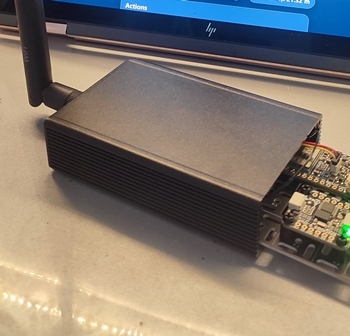
Every development journey begins with a practical requirement.
The aim of this project was to create a compact system capable of measuring motion in real time, presenting the results clearly, recording important events and providing practical controls through a simple browser-based interface.
The system was not developed as a single electronics experiment or a software demonstration. It was designed as a complete equipment platform, where each technical layer supports the others.
The development process included:
Embedded controller programming
Motion-sensor integration
Real-time data processing
Calibration and offset management
Bluetooth Low Energy communication
Browser-based user-interface development
Alarm logic and event handling
Motion-history logging
CSV export functionality
Power and wiring integration
External antenna implementation
Mechanical mounting and enclosure design
Assembly, testing, debugging and refinement
This approach transformed a technical idea into working equipment with a clear operational purpose.
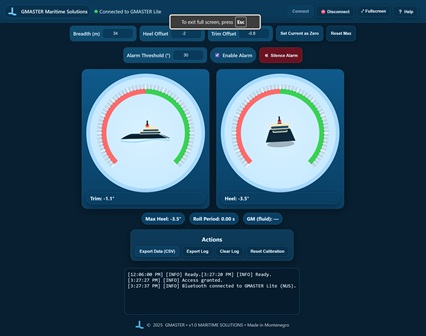
The Compact Motion Monitoring System provides a range of live monitoring, configuration and data-management functions.
Its current capabilities include:
Real-time motion-angle monitoring
Real-time pitch and roll measurement
Live graphical display of motion data
Configurable sensor offsets
Set-current-position-as-zero function
Maximum recorded motion values
Motion-period measurement
User-defined alarm thresholds
Visual and audible alarm indication
Alarm enable, silence, and reset controls
Motion-event logging
Time-history recording
CSV export of recorded data and events
Exportable system logs
Bluetooth Low Energy connectivity
Browser-based monitoring interface
External antenna connection
Compact horizontal mounting configuration
USB power input
Aluminium enclosure integration
The system is designed to make technical information accessible. Instead of requiring specialised software or complex configuration tools, it presents live values, settings, alarms and logs through one clear operational interface.
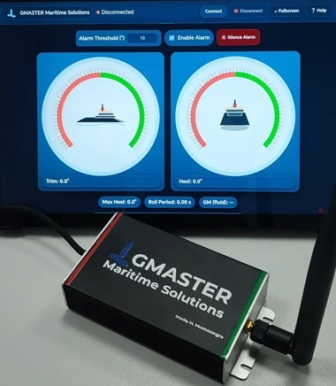
A project like this requires constant movement between technical domains.
One stage may focus on sensor calibration and signal stability. Another may involve improving Bluetooth communication, refining the visual dashboard, integrating wiring into a compact enclosure, developing data logging or adjusting physical mounting.
Each area creates different challenges, but the working method remains consistent:
Define the real operational requirement.
Build a functional prototype quickly.
Test individual modules before full integration.
Identify weaknesses early.
Improve hardware and software together.
Validate the system in practical conditions.
Use evidence from testing to guide the next revision.
Moving between domains is not a distraction when the work follows a structured process. It becomes a technical advantage.
Knowledge gained in one part of the project improves another. Sensor behaviour informs calibration logic. Enclosure constraints influence wiring and antenna placement. User feedback improves dashboard design. Field testing exposes issues that cannot be discovered during bench testing alone.
This is how separate technical tasks become one integrated system.
.png)
Engineering productivity is not measured by the number of concepts produced. It is measured by the ability to turn concepts into working, tested and useful equipment.
The project progressed through short development cycles: build, test, observe, refine and repeat. This made it possible to improve the system continuously while keeping the work focused on practical outcomes.
Rather than waiting for every part to be perfect before testing, functional versions were assembled early. This allowed real technical questions to be answered quickly:
Are the live readings stable and understandable?
Does the interface remain responsive during use?
Does wireless communication perform reliably?
Are alarms visible and practical?
Is the enclosure arrangement suitable for installation?
Can data be logged, reviewed and exported effectively?
Does the complete system remain usable outside the development environment?
This approach reduces unnecessary complexity and keeps development connected to real use.
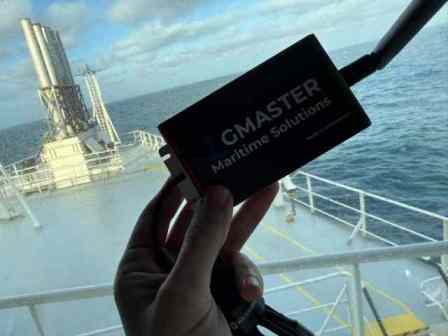
The most important milestone in the development process was moving the Compact Motion Monitoring System beyond the bench.
The equipment entered beta testing in real-world conditions, where the integrated hardware, wireless communication, live dashboard, motion display, alarm controls and data-logging functions could be evaluated as one complete system.
The beta phase produced positive results.
The system demonstrated stable live monitoring, responsive interface behaviour, successful wireless connectivity, usable configuration controls, active alarm functions and practical data-recording capability during real operation.
Testing also confirmed the value of the complete engineering approach. The equipment was not evaluated as isolated hardware or isolated software. It was assessed as a functioning platform: powered, connected, mounted, monitored and operated under practical conditions.
This is a critical distinction. A prototype may prove that an idea is possible. Successful beta testing shows that the system can perform as intended when exposed to real use.
Real-world testing provides the most valuable feedback in industrial R&D.
It reveals details that are difficult to predict in a controlled environment: installation constraints, wireless behaviour, physical handling, user interaction, power stability, display readability, calibration needs and long-term operational reliability.
Each test contributes evidence for the next improvement.
Positive beta-testing results confirm that the Compact Motion Monitoring System has progressed from an early concept into a functioning equipment platform. The results also provide a foundation for continued refinement, expanded validation and future iterations.
The development of industrial equipment does not end with a first successful field test.
Each completed phase creates the basis for the next: improved hardware integration, refined software logic, stronger usability, more extensive testing and broader practical validation.
The Compact Motion Monitoring System represents the result of independent engineering across multiple domains. It demonstrates how embedded electronics, sensing technology, wireless communication, physical design, browser-based software and real-world testing can be brought together into one practical solution.
The process remains focused on one principle:
Build useful equipment, validate it in real conditions and improve it through disciplined engineering.
R&D Aleksandar